
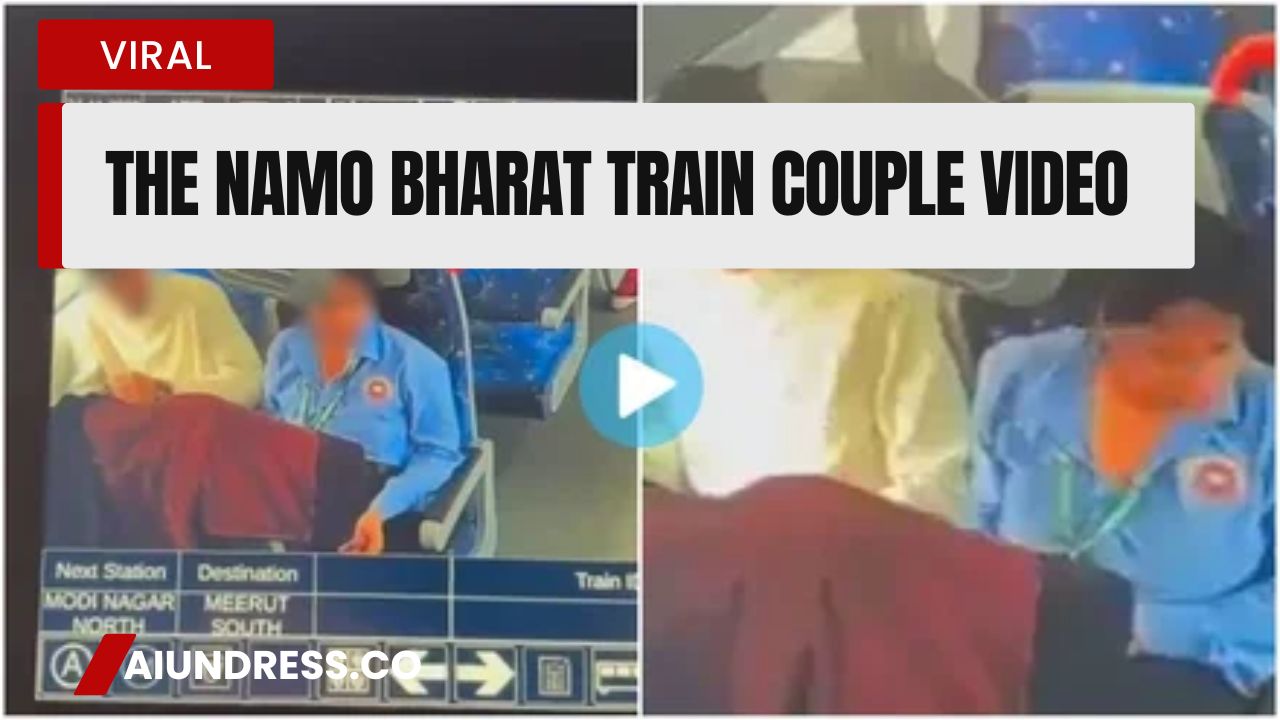
In late December 2025, a video clip sent shockwaves through social media and sparked a nationwide conversation about privacy, public decency, and the consequences of viral content. The “Namo Bharat train couple video”—also referred to as the “4 minute 44 second viral MMS”—showed a young student couple in a compromising position inside a premium coach of the rapid rail system .
But unlike many viral scandals that fade away, this story took an unexpected turn: the couple, after facing intense social pressure and emotional distress, decided to get married. Meanwhile, the train operator who leaked the footage was dismissed from service and faced legal action .

Here’s the complete, fact-checked story of the Namo Bharat train couple video.
The Incident: What Happened on November 24, 2025
| Category | Details |
|---|---|
| Date of Incident | November 24, 2025, approximately 4:00 PM |
| Train Route | Duhai to Muradnagar (Ghaziabad–Meerut RRTS corridor) |
| Coach | Premium Coach Number 23 |
| The Act | A young couple engaged in intimate/obscene acts inside the public coach |
| Recording Method | CCTV cameras installed inside the train captured the footage |
The couple involved consisted of two students from Ghaziabad:

- Male student: 21-year-old B.Tech student from a farming family
- Female student: BCA student at a reputed college
At the time of the incident, the coach had relatively few passengers, with a woman passenger reportedly seated a few rows behind them, facing the opposite direction . The female student was seen wearing her college uniform with an ID card and visible college logo .
How the Video Went Viral: The Operator’s Role
The footage remained within the train’s CCTV system until someone with access decided to leak it.
The Leaker: Train Operator Rishabh
| Category | Details |
|---|---|
| Name | Rishabh (single name) |
| Position | Train Operator under NCRTC contractor |
| Action | Used mobile phone in operator’s cabin during duty to record CCTV footage of the couple |
| Date of Leak | Late November 2025; went viral by mid-December |
Rishabh recorded the footage from the operator’s cabin using his personal mobile phone . The video also showed the train’s running details, confirming it was filmed during the journey . He then shared it on social media platforms, where it spread rapidly.
Company Response
On December 3, 2025, after an internal investigation, the company operating under NCRTC terminated Rishabh’s services . Officials confirmed that using a mobile phone without authorization was a direct violation of company rules and standing orders .
The Aftermath: Shame, Depression, and a Family Decision
The viral video had devastating consequences for the young couple.
Emotional Toll
| Impact | Details |
|---|---|
| Shaming | Both students stopped attending college to avoid further harassment |
| Relocation | The female student was sent to stay with relatives far from her original location |
| Mental Health | The girl became deeply disturbed and reportedly attempted suicide |
| Family Intervention | Women from the family stepped in at the right time, spoke to her, and helped calm her down |
A family member revealed: “The video caused a lot of shame and emotional pain to the female student. She became very disturbed and tried to harm herself” .
Community Decision: Marriage
Seeing the severe mental distress and social pressure, elders from both families and the community stepped in . Their conclusion: marriage was the most practical solution.
The male student’s father publicly accepted his son’s mistake, saying:
“I accept my son’s mistake. Such incidents shock society, irrespective of age. He is my son, and she is someone else’s daughter. Marriage will be the ultimate solution for their mistakes.”
Key points about the decision:
- The couple was already engaged before the incident
- Both are adults and belong to the same community
- Families wanted to avoid prolonging the “issue” and prevent further “social untowardness”
The Wedding: From Viral Shame to Matrimony
By early January 2026, reports confirmed that the couple’s wedding date had been fixed .
Wedding Details
| Category | Details |
|---|---|
| Engagement | Conducted privately in late December 2025 |
| Ceremony | No outsiders invited; no photographs or videos allowed |
| Timing | Wedding scheduled within weeks (early January 2026) |
| Location | Private ceremony in Ghaziabad |
The families prioritized privacy above all else, ensuring no media or outsiders could document the event .
The “4 Minute 44 Second” Timestamp
The viral video was often referred to with the specific timestamp “4 minute 44 seconds” . This precise duration became a search term in itself, with users seeking the “4 minute 44 seconds viral MMS link” .
This follows the pattern of other viral timestamp scams (19:34, 12:46, etc.), but in this case, the video was genuine CCTV footage—not a fabricated scam. However, the timestamp became part of the clickbait culture surrounding the incident .
Summary: Key Facts at a Glance
| Element | Details |
|---|---|
| Date of Incident | November 24, 2025 |
| Location | Namo Bharat train, Duhai to Muradnagar |
| Couple | 21-year-old B.Tech student & BCA student from Ghaziabad |
| Leaker | Train operator Rishabh |
| Leaker’s Fate | Terminated Dec 3, 2025; FIR registered |
| FIR Date | December 22, 2025 |
| Couple’s Outcome | Engaged and married by January 2026 |
| Video Duration | Approximately 4 minutes 44 seconds |
Final Thoughts: A Story of Multiple Layers
The Namo Bharat train couple video is not a simple story of scandal. It encompasses:
- The act itself – A private moment made public, raising questions about behavior in shared spaces
- The breach of privacy – A CCTV operator violating rules and ethics to leak footage
- The legal consequences – FIRs against both the couple and the leaker
- The human toll – Depression, suicide attempt, and social shaming
- The resolution – A community-forced marriage to “save face”
- The debate – Conversations about privacy in public transport and the morality of sharing surveillance footage
As one report noted: “The couple has been lambasted for their acts in a public setting, but those who illicitly recorded and transmitted the footage are also widely criticised” .
In the end, two young lives were permanently altered—not just by their own actions, but by a system that failed to protect their privacy and a society quick to judge but slow to understand.